
Last Updated: November 16, 2026
Data note: Utah County street lists use Utah County permit records through Nov 3, 2026. The county removed its permit feed, so there is no newer Utah County data.
Quick Summary
New construction leads for water softener installers come from public building permit records, which show where new homes are being built. Installers plan outreach around estimated move-in windows, timed to the stage before a homeowner makes water treatment decisions.
- Public building permits show which streets have new homes under construction.
- Permits show where homes are built, not when they finish or who will move in.
- Estimated move-in timing helps you decide when to start outreach on each street.
- Reach out to homes nearing move-in first, then follow the weekly street list.
- Test the water hardness or check local water quality reports before recommending a system.
Table of Contents
- Why New Construction Is a Strong Market for Water Softener Installers
- Do New Homes Need a Water Softener?
- Using Public Building Permits to Find New Construction Water Softener Installation Opportunities
- Qualifying Builders, Permits, and Plumbing Coordination
- Water Filtration Leads: Expanding Beyond Softeners
- Evaluating Water Softener New Construction Leads Reviews and Lead Sources
- Get the Free Utah County Street List
- Frequently Asked Questions
Why New Construction Is a Strong Market for Water Softener Installers
Water softener installers often find that new construction leads are one of the more predictable places to find work. New homes are built on a schedule, and the period just before move-in is when a homeowner is most likely to be making decisions about water treatment. New Home Watch uses public building permit records to help local installers plan outreach around estimated move-in windows.
The challenge is timing. A builder may pull permits months before a house is finished, and not every permitted home reaches move-in on the same schedule. Installers who reach out too early waste time, and those who wait too long lose the window. Planning around estimated move-in dates gives you a better shot at the right street at the right time.
Do New Homes Need a Water Softener?
Whether a new home needs a water softener depends on the local water supply. Hard water is common in many parts of the country, and it can cause scale buildup in water heaters, fixtures and appliances.
Before recommending a system, a practical step is to test the water hardness at the property or to check the local water provider's published water quality reports. This keeps your recommendation grounded in what the water actually contains, not assumptions about the neighborhood.
Using Public Building Permits to Find New Construction Water Softener Installation Opportunities
Public building permits are a useful starting point for finding new construction work. Permit records show where new homes are being built, and they give you addresses you can organize by street. New Home Watch turns those records into weekly street-by-street lists, so you can see which neighborhoods are active.
A common mistake is treating every permit as a sales lead. A permit tells you a home is being built. It does not tell you when the home will be finished or who will move in. Use the permit as a prospecting list, then build your outreach plan around the estimated move-in timing.
Timing Outreach Around Estimated Move-In in Utah County
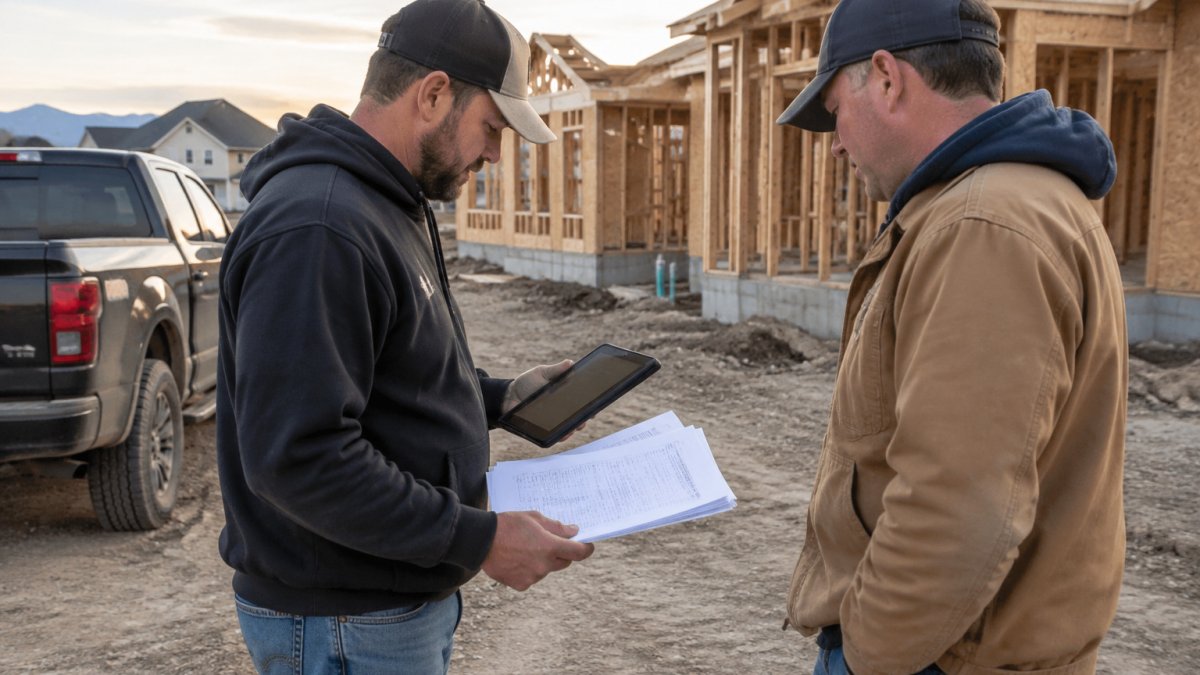
Utah County street lists use permit records through Nov 3, 2026 (the county removed its permit feed), and the estimated move-in timing helps you decide when to start. Homes closer to completion are better targets for finish-stage work than homes that have only just broken ground. You can review Utah County coverage on the New Home Watch Utah County market page.
Plan your outreach in waves. Reach out to homes nearing move-in first, then follow up as more streets become active on the weekly list. Keep a simple log of which streets you have contacted and when, so you do not repeat outreach or miss a window.
Qualifying Builders, Permits, and Plumbing Coordination
New construction rewards installers who understand how a builder moves a home from permit to move-in. Most builders run a sequence of stages: permit issued, foundation, framing, rough-in plumbing, inspections, finish work, final walkthrough, and closing. Each stage has a different buyer. The person who matters at permit stage is often a project manager or purchasing lead, while the plumber on site controls what happens at rough-in. Knowing which person you are talking to at each stage keeps your outreach from landing in the wrong inbox.
Start by identifying the builders active in the streets on your New Home Watch list. Public permit records often list the builder or contractor name, and you can confirm current builder activity by checking the builder's own community pages and local listings.
When you reach a builder, ask a small set of qualifying questions before you propose anything:
- Do you use in-house plumbers, or do you subcontract water treatment work?
- Who approves vendors for water treatment, and how do you prefer proposals to arrive?
- At what point in the build do you want water treatment scheduled: during rough-in, or after finish work?
- Do your homes typically include a water softener as standard, or is it an upgrade the buyer chooses?
The answers help you judge whether a builder is a one-off or a longer-term opportunity.
Coordinate with plumbers early. Water softener installation connects to the home's supply lines, so the rough-in plumbing stage is usually when the connection points, bypass valve location, and drain access are set. If you can talk to the plumber before drywall closes in, you can flag where the unit needs clearance and where a drain line must run. Ask the builder for the rough-in completion date, and treat that milestone as the window to start conversations, not the day of move-in.
Do not assume a builder will coordinate with you on the plumber's schedule. Confirm the sequence with the site superintendent.
Use estimated move-in timing from the weekly street list to decide when to follow up. Homes earlier in the build may suit a conversation with the builder, while homes nearing move-in may suit direct outreach about finish-stage installation. This keeps your effort matched to where each home actually sits in the build.
Water Filtration Leads: Expanding Beyond Softeners
Many new homeowners want more than a softener. Whole-home filtration, drinking water systems and sediment filters are all common requests in new construction. Offering a range of options can help you serve more of the homes on your street list.
Keep your filtration offerings simple. A homeowner is more likely to say yes to a clear, limited set of options than to a long catalog. Explain what each system does in plain terms, and tie your recommendation to the water test results or the home's specific needs.
Evaluating Water Softener New Construction Leads Reviews and Lead Sources
Before you pay for any lead source, test it against a few questions you can answer yourself. Lead sources in this space vary widely, and other providers offer different types of data. Each type produces different results, so judge them by what they actually deliver.
Use this checklist when you evaluate a source:
- What is the underlying data? Ask whether the list comes from public building permits, from builder partnerships, or from consumer inquiries. Public-permit data shows where homes are being built, not who is ready to buy.
- How is timing estimated? A credible source explains how it estimates move-in. Estimated timing is a planning tool, and a source that promises confirmed dates is overstating what it can know.
- Does it include contact information? Be cautious of any source that claims homeowner phone numbers or email lists tied to new construction, and verify exactly what fields you receive before you buy.
- Does it cover your counties? Coverage matters more than total volume. A smaller list in the county where you already work often beats a larger list in a county you cannot serve.
- Can you see a sample? A sample street list shows the format, the level of detail, and how the streets are grouped. You can review a sample of the format on the Orem sample street list before you decide.
- What does a trial cost you? A free trial with a card on file is common, so note the renewal date and cancel before it starts if the list does not fit your process.
Look for reviews from installers in markets similar to yours, with specifics such as how many streets they worked, how long outreach took, and whether timing estimates held up.
New Home Watch provides public-permit street lists and estimated timing for new homes nearing move-in. It does not provide homeowner phone numbers, email lists, or confirmed installation dates. Judging sources by the same checklist will show you which fits your outreach plan, and you can see Utah County coverage on the New Home Watch Utah County market page.
Before paying for any lead source, compare what each one actually delivers using these key differences.
| Check | What to look for | Why it matters |
|---|---|---|
| Underlying data | Public permits, builder partnerships, or consumer inquiries | Permits show where homes are built, not who is ready to buy |
| Timing | Explained estimate of move-in | Estimates are for planning, not confirmed dates |
| Contact information | Verify exactly which fields you receive | Avoid sources claiming homeowner phone or email lists |
| Coverage | Counties you can actually serve | A smaller local list often beats a larger distant one |
| Sample | A sample street list to review | Shows format and level of detail before you buy |
| Trial cost | Renewal date and card requirements | Cancel before renewal if the list does not fit |
Get the Free Utah County Street List
If you install water softeners in Utah County, the free street list lets you look at move-in streets before you commit, with no card required. Utah County data runs through Nov 3, 2026, because the county removed its permit feed.
Get the free weekly street list and review the Utah County streets.
Frequently Asked Questions
Do new homes need a water softener?
Not every new home requires one. Hardness levels vary by county and water source. Hardness levels vary by county and water source, so installers usually confirm water hardness with a test before recommending a system. Public permit records can show which homes are close to move-in, giving installers a chance to propose a softener while plumbing is still accessible. Use the water test results to tailor your offer rather than assuming every home needs the same system.
What connections does a water softener need in a new home?
A softener typically connects to the main cold water line entering the home, with a bypass valve and drain connection nearby. Plumbing coordination matters because the install is easiest before finish work is complete. Confirm the home's water supply layout, the available drain point, and the electrical outlet location if the unit needs power. Coordinating with the plumber or builder early avoids rework and keeps the install on schedule.
How can contractors use public building permits to identify homes nearing move-in?
Public building permit records show which addresses are under construction and at what stage. Contractors can organize those records by street and track estimated move-in timing to plan outreach. New Home Watch compiles weekly street lists of new homes nearing move-in, estimated from public permit data, so you can target the right streets at the right time. The lists show estimated timing, not confirmed installation dates or homeowner contact details, so plan your outreach around move-in windows.
Are new-construction water softener leads confirmed homeowner inquiries?
No. New Home Watch provides street-level lists of new homes nearing move-in, estimated from public building permits. It does not provide homeowner phone numbers, email addresses, or confirmed installation dates. Treat the list as a prospecting map that tells you where and roughly when new homes are finishing, then build your own outreach to builders and homeowners. Get the free weekly street list to review Utah County streets before committing.
